Neurofeedback is a gentle, non-invasive form of brain training that supports the brain’s natural ability to learn and self-regulate.
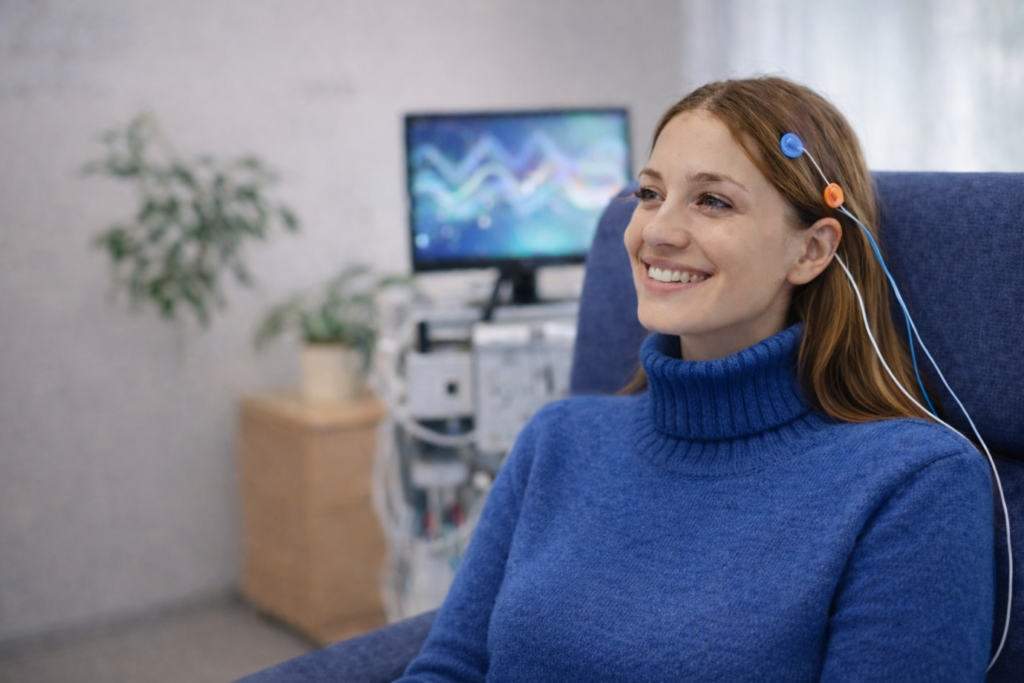
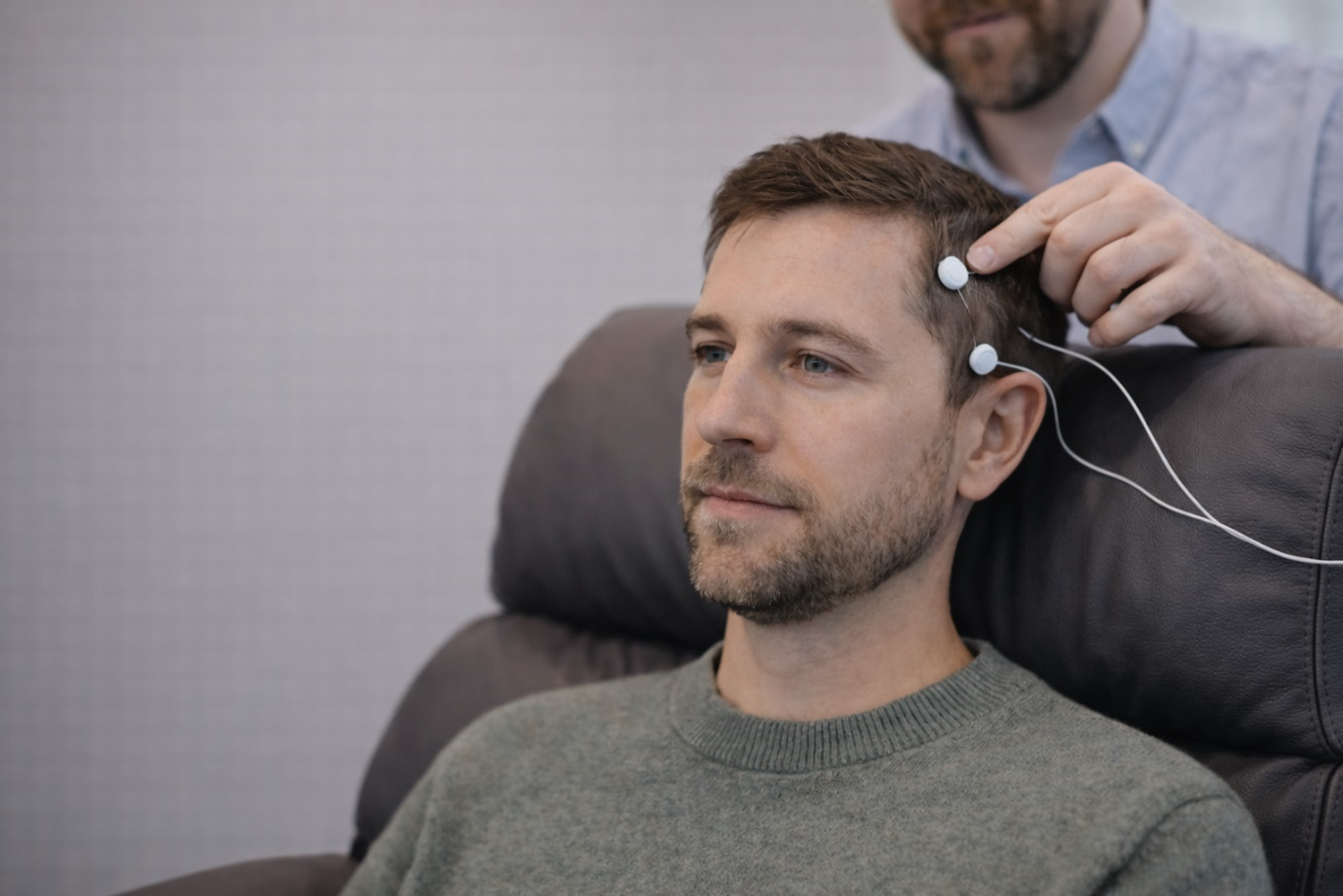
Small sensors placed on the scalp measure patterns of brain activity. This information is then reflected back to the brain through gentle visual or audio feedback during a session, as changes on a screen or variations in sounds , allowing the brain to become more aware of how it is functioning.
Over time, the brain learns to move towards healthier patterns of activity. — without stimulation, medication, or intervention.
Neurofeedback does not aim to control or force change. Instead, it simply reflects information back to it that allows the brain to respond in a self-directed way. Sessions are guided by ongoing observation rather than fixed outcomes.
How does neurofeedback work?
Neurofeedback is explored by individuals for a wide range of experiences related to focus, emotional regulation, stress, sleep, or cognitive flexibility.
Since every brain is different, training programmes are always individualised and guided by ongoing observation rather than fixed outcomes.
A gentle, non-invasive process
Non-invasive: Neurofeedback involves measuring brainwave activity using small sensors placed on the scalp. These sensors simply monitor electrical activity – nothing is put into the brain, and no electrical stimulation is used.
Drug-free: Neurofeedback does not involve medication or medical procedures.
Brain-led learning: Feedback simply reflects information back to the brain, allowing it to respond in its own way over time.
Well-established practice: Neurofeedback has been explored internationally for several decades as a non-medical, brain-based learning approach and continues to be researched within neuroscience and psychology.
Understanding Neurofeedback
Much of what the brain learns happens without conscious effort — like walking, typing, or riding a bike. Neurofeedback works at this same level of awareness, supporting change without requiring you to “think your way through it.”
Nothing is being done to the brain. Nothing is being put into the brain, and nothing is forced — the brain is simply responding to information about itself.
What to Expect During a Neurofeedback Session
✓ Length: Around 45 minutes from start to finish
✓ Gentle setup: Small sensors are placed on the scalp using a conductive paste (nothing is sent into the brain)
✓ Brief check-in: Each session begins with a short conversation about how you’ve been feeling since your last visit
✓ Individualised training: Sensor placement and training are adjusted based on your goals and how your brain is responding over time
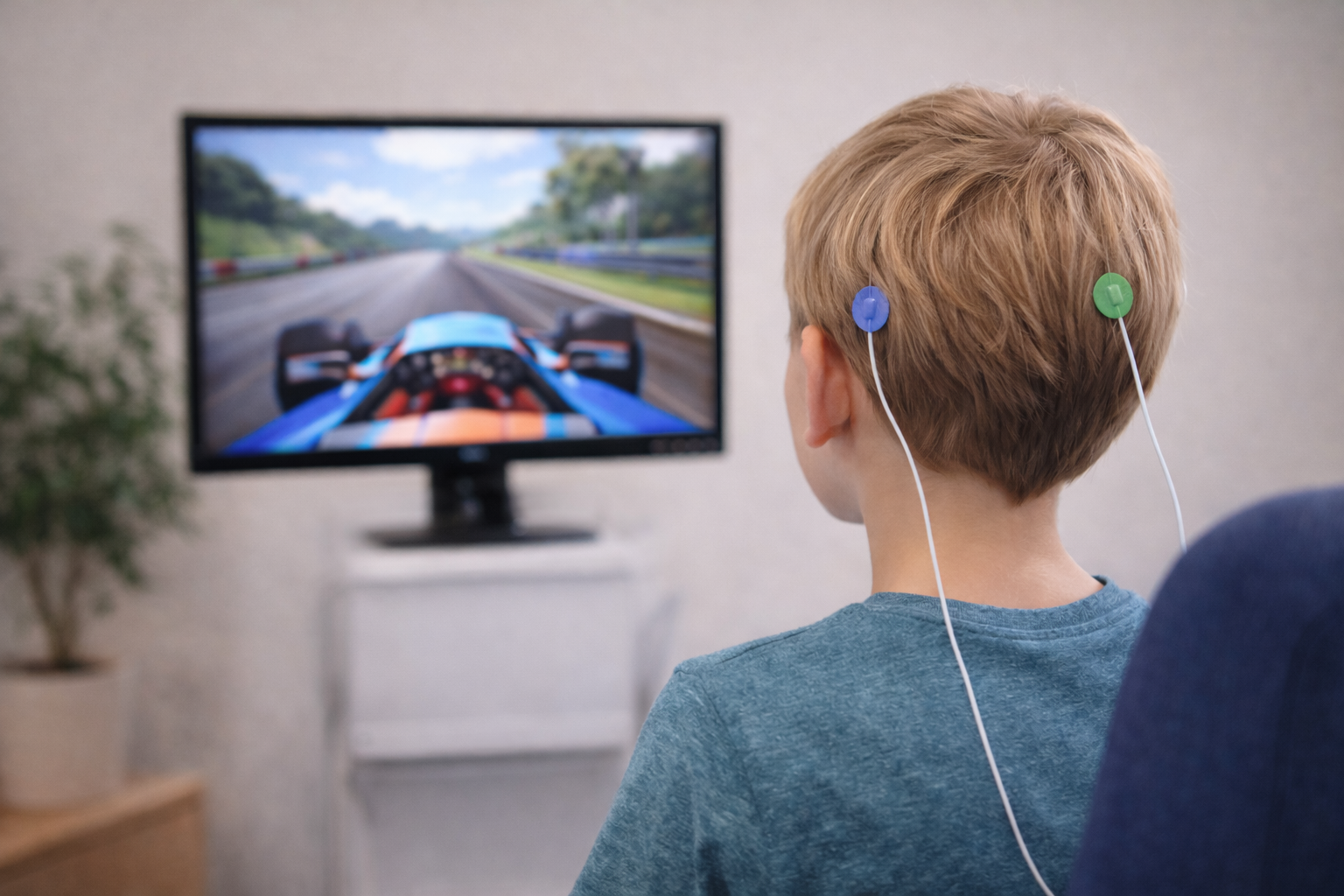
✓ Relaxed experience: You can watch a film or play a simple game — there’s no need to concentrate or actively do anything
✓ Real-time feedback: The system responds to brain activity through visual and audio signals
✓ Ongoing support: The clinician checks in during the session to make sure you’re comfortable
✓ Simple finish: Sensors are removed and the scalp is cleaned before you leave.
No two programmes are exactly the same — training evolves as your brain does and sessions are tailored to each individual.
When neurofeedback is commonly explored?
Research over several decades has explored the use of Neurofeedback across a wide range of difficulties related to brain regulation, stress, and overall nervous system balance.
✓ Focus & Regulation:
Neurofeedback is used as a way of supporting focus, impulse control, and the brain’s ability to regulate attention over time. Commonly in people with ADHD and Executive functioning challenges.
✓ Emotional & Stress-Related Difficulties:
Neurofeedback may support the nervous system in settling patterns of heightened arousal and improving awareness of emotional responses. This would aid individuals with anxiety, chronic stress and trauma related symptoms.
✓ Sleep & Energy Regulation:
Some people with insomnia, sleep disruption or chronic fatigue explore neurofeedback to support brain rhythms linked to sleep–wake cycles, rest, and recovery.
✓ Neurological & Physical Symptoms:
People suffering from migraines and headaches, post-concussion symptoms, tinnitus or chronic pain may explore neurofeedback. In these areas, neurofeedback is sometimes used as a supportive approach alongside other medical or therapeutic care.
✓ Hormonal & Life-Stage Transitions:
Neurofeedback may be explored to support nervous system regulation during periods of hormonal and neurological change, such as perimenopause / menopause-related symptoms (particularly where sleep, anxiety, or cognitive changes are present).
Still Wondering?
Is neurofeedback right for me or my child?
Neurofeedback is suitable for many people, but it is not a one-size-fits-all solution.
We understand your concerns, reach out to us and we can explore whether neurofeedback may be appropriate as part of your wider support plan.
Neurofeedback is a growing area of research within neuroscience and clinical practice. For those who would like to explore the evidence base in more depth, we’ve gathered a selection of research articles, reviews, and educational resources.
Important note: Neurofeedback is not a medical treatment and does not diagnose or cure conditions. It is offered as a supportive, non-invasive approach, and individual experiences vary. We always encourage clients to continue any existing medical or therapeutic care alongside neurofeedback.